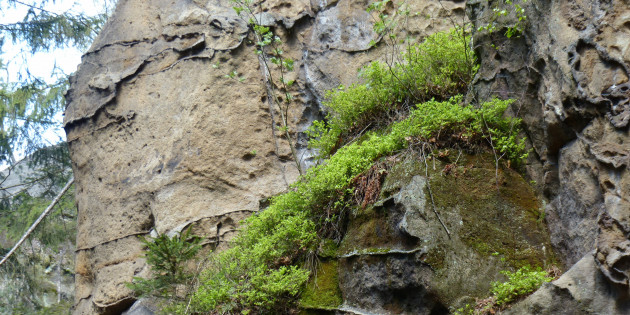
Ruggedly towering rock formations, unspoilt forests and deep valleys alternate with plateaus and mesas - the Elbe Sandstone Mountains are an extraordinary natural refuge. Rare plants and animals are native here. With an area of over 172.5 km², the cross-border protection area of the Saxon and Bohemian national parks forms the particularly protected core of the cultural landscape.

In order to preserve the natural heritage, the protective idea of letting nature be nature is to be implemented in this area. The aim is to create a natural space, a wilderness to protect endangered species. Largely unaffected by humans over long periods of time, an intact ecosystem could develop here, where scientific environmental observations, environmental education and nature experiences are also possible.
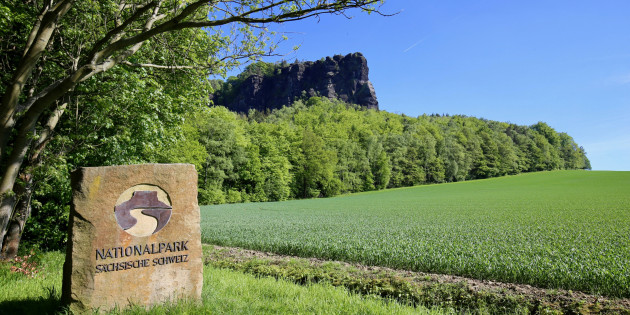
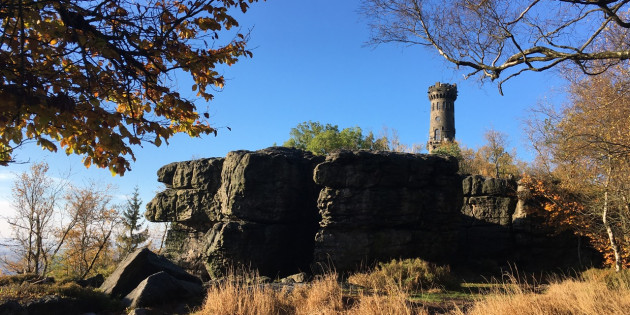
©AdobeStock,olimeg

The region of the Elbe Sandstone Mountains is full of diversity and contrasts. Unspoiled nature directly meets agricultural land and settlements. Nature and culture unite here to form an unmistakable whole. This cross-border landscape extends over a total area of more than 700 Square kilometre. In order to preserve its uniqueness, parts of it have been designated as protected areas.

In 1956 the Saxon Switzerland Landscape Protection Area was created and in 1990 the Saxon Switzerland National Park. Today, both protected areas are being developed together as the Saxon Switzerland National Park Region. On the Czech side, the Protected Landscape Area Elbsandsteingebirge (CHKO Labské pískovce) has existed since 1972 and the National Park Bohemian Switzerland (Národní park České Švýcarsko) since 2000.

©Bad Schandauer Kur- und Tourismus GmbH, Jiri Stastny

The Elbe Sandstone Mountains already reveal in their name what they are made of: Ragged and weathered sandstone defines the landscape. Its formation began in the Cretaceous period 100 million years ago. Over a period of 7 million years, thick layers of sediment were deposited at the bottom of a Cretaceous inland sea. Due to high pressure, the sediment solidified and a compact sandstone plate was formed. After the sea retreated, the massive plate was exposed to strong tectonic processes. The Lusatian granodiorite massif partially pushed onto this massive chalk layer package and with the uplift of the Ore Mountains plateau in the Tertiary, the sandstone layers tilted so that older sediments resurfaced in the southwest. These processes formed a strongly indented profile, which was partially buried and leveled by deposition of the advancing inland ice during the last cold period in the so-called flatlands. Until today, wind and water continue to model the Elbe.

©Bad Schandauer Kur- und Tourismus GmbH, Romy Geißler

Since its settlement in the 13th century, the Elbe Sandstone Mountains have been repeatedly changed by man. The traces are manifold and characterize the landscape until today. Natural resources formed the basis of life for the inhabitants. Settlements with agricultural land as well as road, later road and rail networks developed. The extraction of wood and forestry reshaped the forest. Sandstone quarrying established entire industries in the region. For a long time, rivers were the only supply and transport routes and were regulated accordingly.

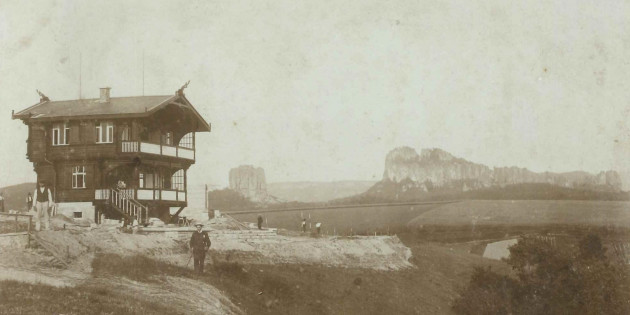
Since the beginning of the 19th century, tourism played an increasingly important role. Saxon Switzerland quickly developed into a magnet for visitors. Climbing facilities and signposting soon facilitated access to the mountains. Today, more than three million guests visit the region every year. A balancing act between nature conservation and regional development. Sensitive tourism is to be promoted by the idea of national park partners. Companies with a sustainable and environmentally friendly way of working are ambassadors of the national park idea.

© Bad Schandauer Kur- und Tourismus GmbH

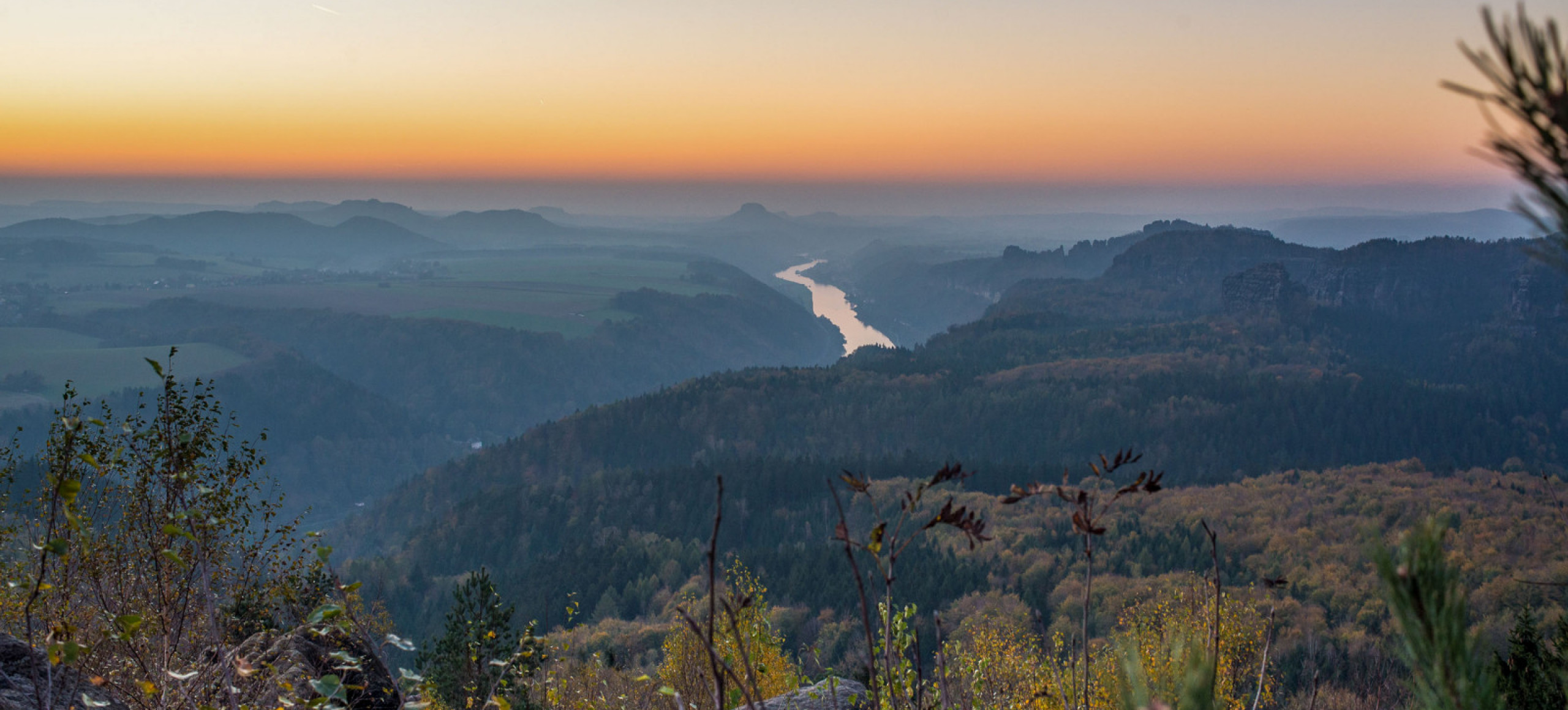
Bad Schandau is embedded in the Saxon-Bohemian Elbe valley landscape. Downstream of the Elbe lie culturally and historically significant cities such as Pirna, Dresden and Meissen. Upstream, the Elbe crosses the Bohemian low mountain range, where the countless cone-shaped basalt peaks of the mountains form a beautiful hilly landscape.      

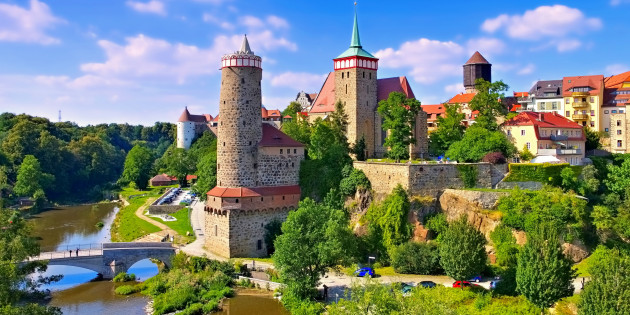
Directly to the northeast of the Elbe Sandstone Mountains is Lusatia with its Sorbian customs and beautiful half-timbered houses. Highlights are cities like Bautzen and Görlitz or the natural areas of the Upper Lusatian Mountains and the Zittau Mountains. A trip to the Upper Lusatian Pond and Heathland Biosphere Reserve is also very rewarding.

To the west of the Elbe Sandstone Mountains rise the Eastern Ore Mountains. The region is not only known for its low mountain range and winter sports. Mining determined the history and customs of this region. The occurrence and mining of tin, silver and iron ore gave the whole mountain range its name. A visit to one of the show tunnels or mining museums is recommended.

© Adobe Stock, LianeM

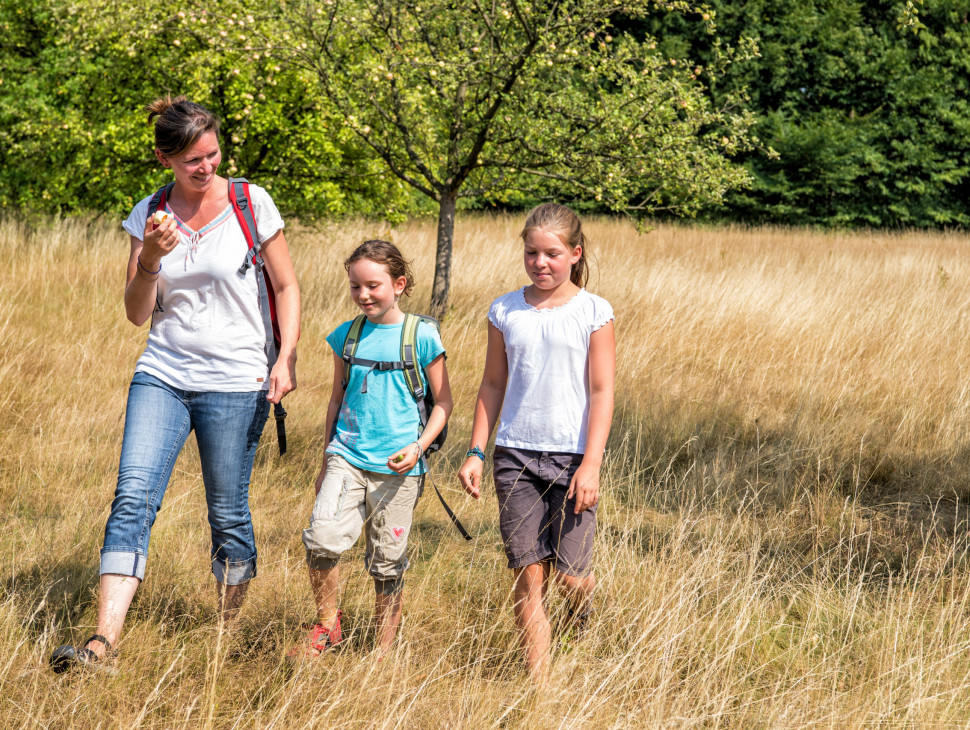
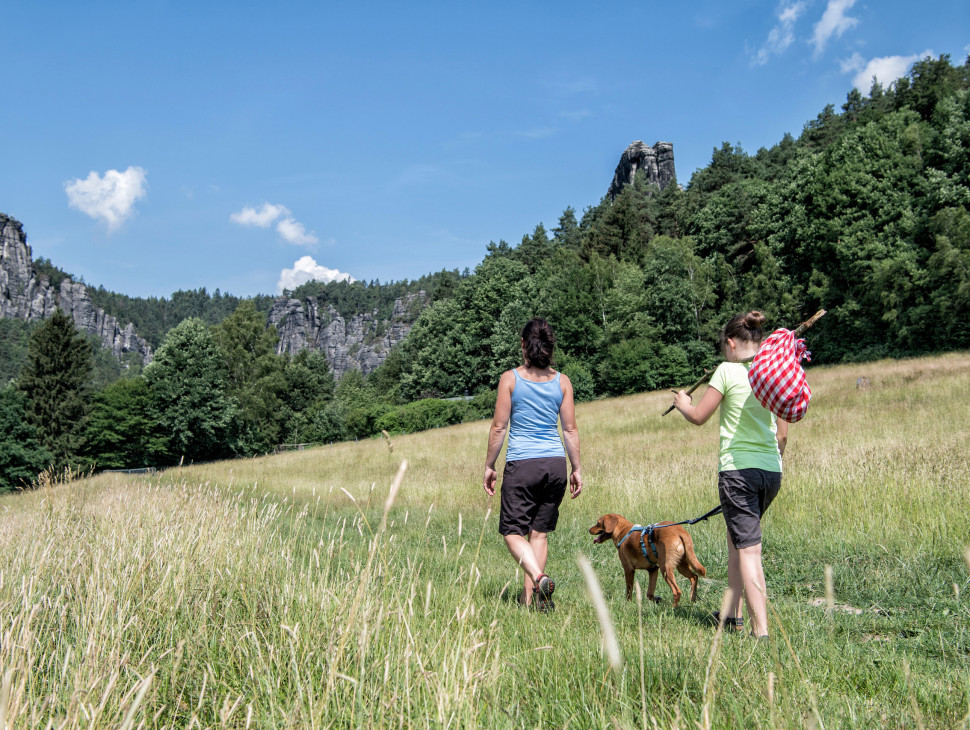
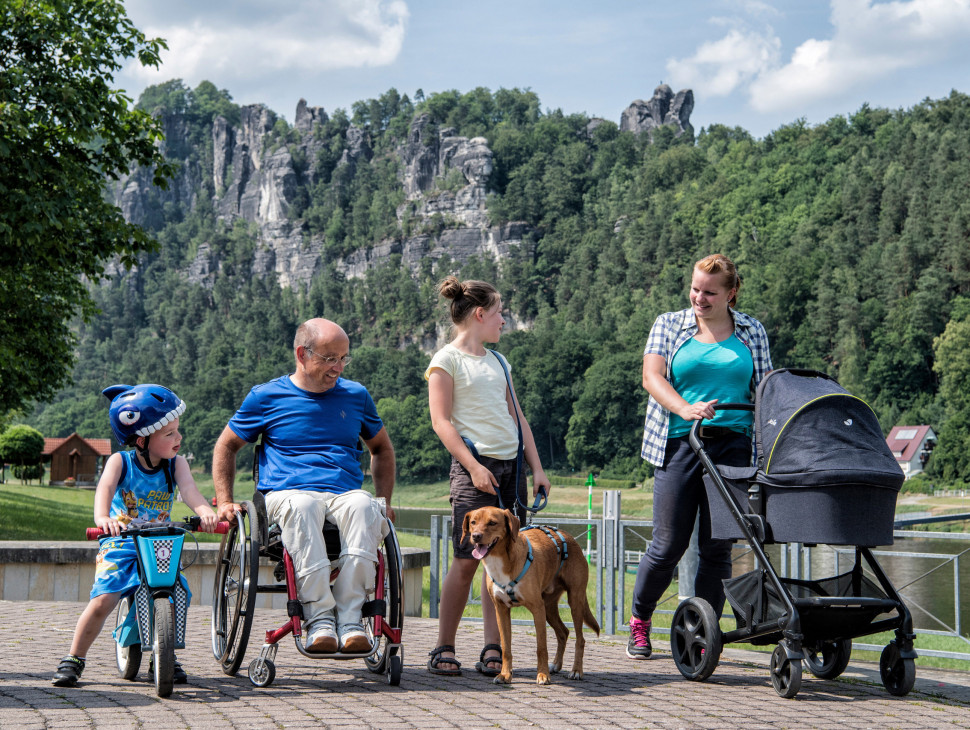
The charming thing about the Elbe Sandstone Mountains is their rugged profile. Winding paths, steep climbs and rustic rock passages characterize the landscape and promise exciting explorations. However, these features can also be challenging and there are a few things to keep in mind. Our recommendations for families with children, tips for dog owners or suggestions for barrier-free activities can help to organize your activities optimally.

Child

Mysterious and fabulous - for children, the Elbe Sandstone Mountains are an ideal area to be active. The little ones can playfully discover the landscape and culture here.

Parents, however, must be all the more attentive, because nature also harbors dangers.

Those who hike with children should always plan enough opportunities and time for breaks. Relaxed hiking prevents accidents!

Children learn respect for nature and consideration for others from adults. Let's set a good example for them!

Our notes:

  • Many exposed areas and steep drop-offs are not secured.
  • Children should always stay within sight.
  • Appropriate equipment (hiking boots, rain jacket, headlamp, backpack) saves many inconveniences.
  • Always take enough water and provisions with you.
  • Divide tours into sections and discuss the itinerary together at the beginning of the hike.

Dog

What could be better than being out and about with our four-legged friends?

For dogs, the Elbe Sandstone Mountains are just as much an adventure as they are for us humans.

However, not all hiking trails and tours are suitable for dogs.

Especially grates and iron ladders are not suitable for the paws of our animal darlings.

Our notes:

  • Avoid steep tracks and tourist hotspots.
  • Obtain detailed information about the route.
  • Use hiking guides for dogs and appropriate apps.

On the way with restrictions

Many destinations in the Elbe Sandstone Mountains are accessible without barriers.

The public transport network, cultural institutions and most restaurants have adapted to people with impairments.

For active vacationers with limitations, there are plenty of opportunities to be out and about in the landscape.

Our notes:

... provide useful information on suitable tourist offers.

Saxon Switzerland offers a real treasure trove of excursion destinations, highlights and sights. The region impresses with its breathtaking landscape of bizarre rock formations, deep gorges and dense forests. Here are some of the highlights you can discover in Saxon-Bohemian Switzerland:

Bastei

The queen of the cultural landscape

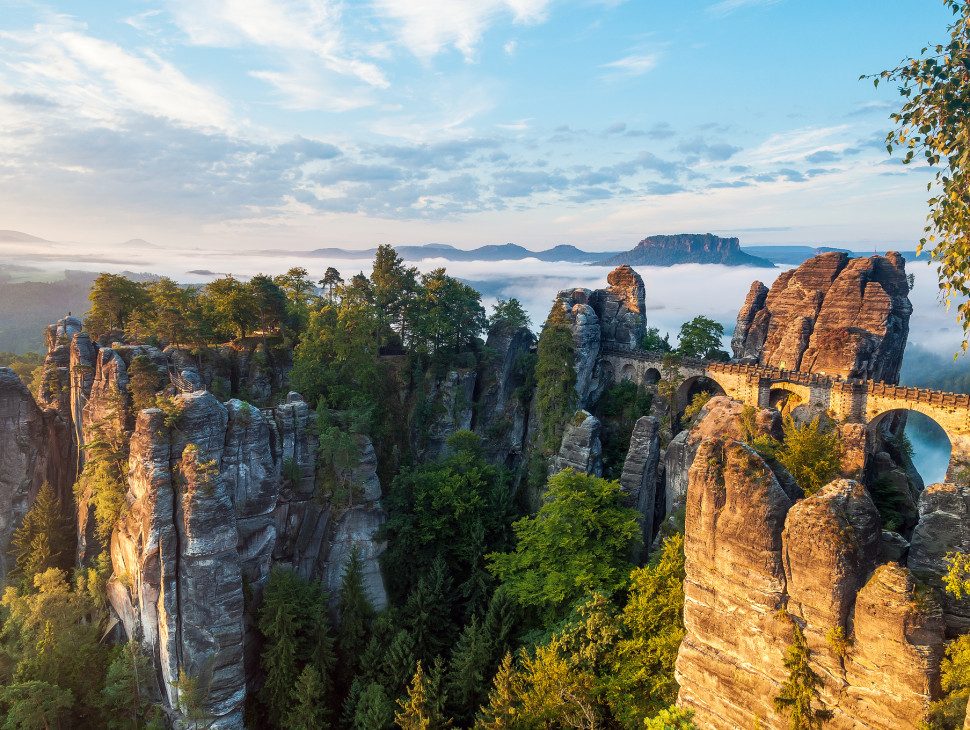
The rock reef of the Bastei is one of the oldest and most well-known excursion destinations in Saxon Switzerland. The viewing platform offers an impressive view of the Elbe valley landscape.

The famous Bastei Bridge was built in 1850/51 and elegantly spans the deep chasms of the Mardertelle. The entrance to the open-air museum of the Felsenburg Neurathen is in the immediate vicinity.

Interesting details:
As early as 1826, a wooden bridge opened up the rocky area before the elegantly built stone bridge was built. A special magic unfolds between the building and nature in the light of dusk or when wafts of fog rise.

Our hiking tip:

Parking spot Rathewalde - Grünbachtal (blue Line) – Schwedenlöcher (blue Line) – Bastei – Rathewalder Fußweg (yellow Line) - Rathewalde

Kuhstall

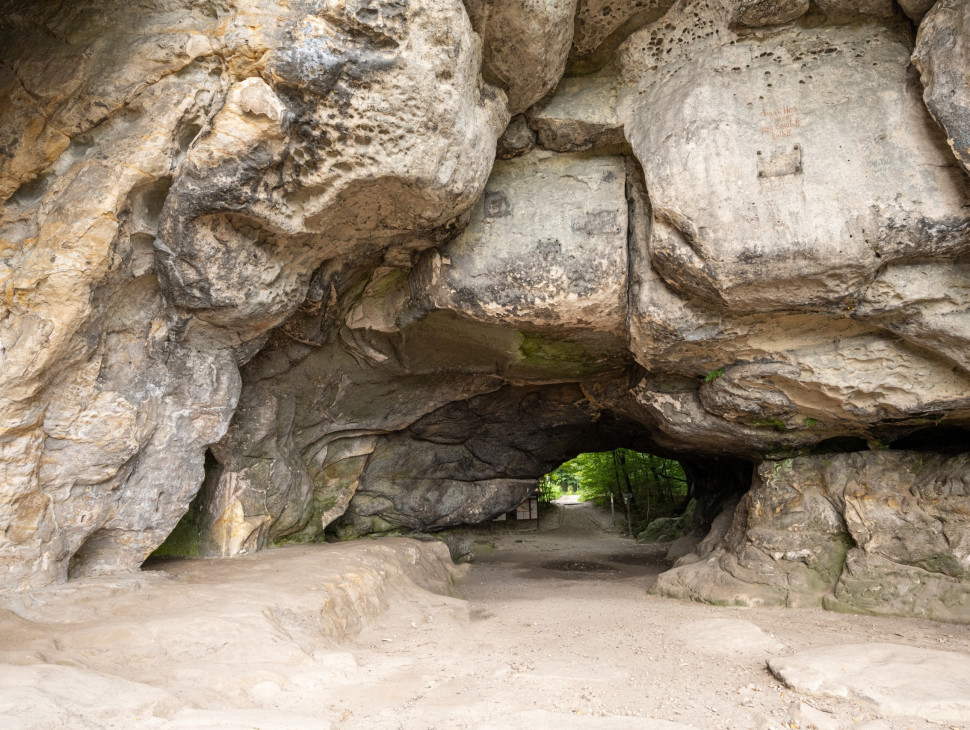
The largest rock gate in Saxon Switzerland

The Felsentor, eleven meters high and seventeen meters wide, is located on the Neuer Wildenstein.

A narrow staircase, the Himmelsleiter, leads up to the rock plateau above the cowshed, where the remains of a medieval castle can be seen.

The many inscriptions on the walls and ceiling of the cowshed date from the early days of tourist development.

Interesting details:
The cowshed was a station on the classic hiking trail through Saxon Switzerland. Some inscriptions on the walls and ceiling of the Felsentor also date from this early period of tourist development.

Our hiking tip:
Bad Schandau – Panoramaweg (yellow Point) to Lichtenhain – Hörnelweg to Lichtenhainer Wasserfall (red Line) - Kuhstall (red Point) – Hinterer Kuhstallweg (red Line) – Räumichtweg - Dittrichsgrund – Beuthenfall - Tram back to Bad Schandau

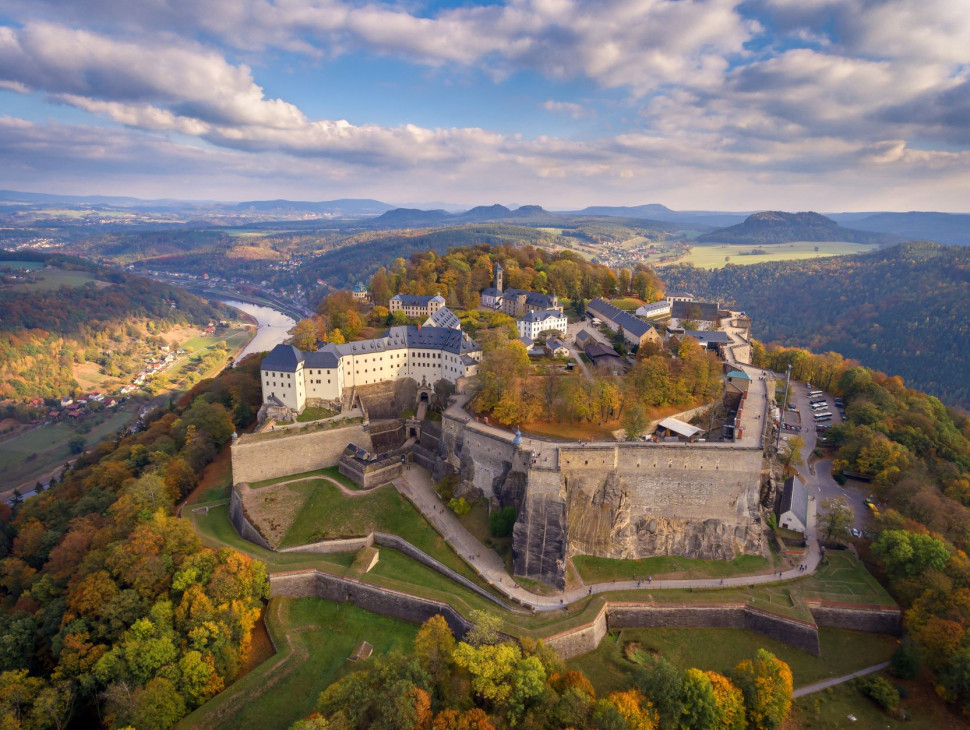
Königstein Fortress

Building and panorama of superlatives

The largest mountain fortress in Germany towers impressively on the Table Mountain of the same name.

There are more than 50 buildings on the 9.5-hectare rock plateau, which are surrounded by a 1,800-meter-long rampart. In the center is the second deepest castle well in Europe at 152.5 meters deep.

A tour of the outdoor area opens up an incomparable panorama of the landscape of Saxon Switzerland.

Interesting details:
The first full name Königstein can be found in the Upper Lusatia border document from 1241, which the Bohemian King Wenzel I sealed with "in lapide regis" (Latin: on the king's stone). A permanent exhibition of the same name gives exciting reports on the more than 800-year-old history of the fortress.

Our hiking tip:
Trainstation/Marketplace  City Königstein - Bibelpflanzgarten (yellow Point) - Alte Festungsstraße (red Point) - Königstein Fortress - Latzweg (blue Line) - City Königstein

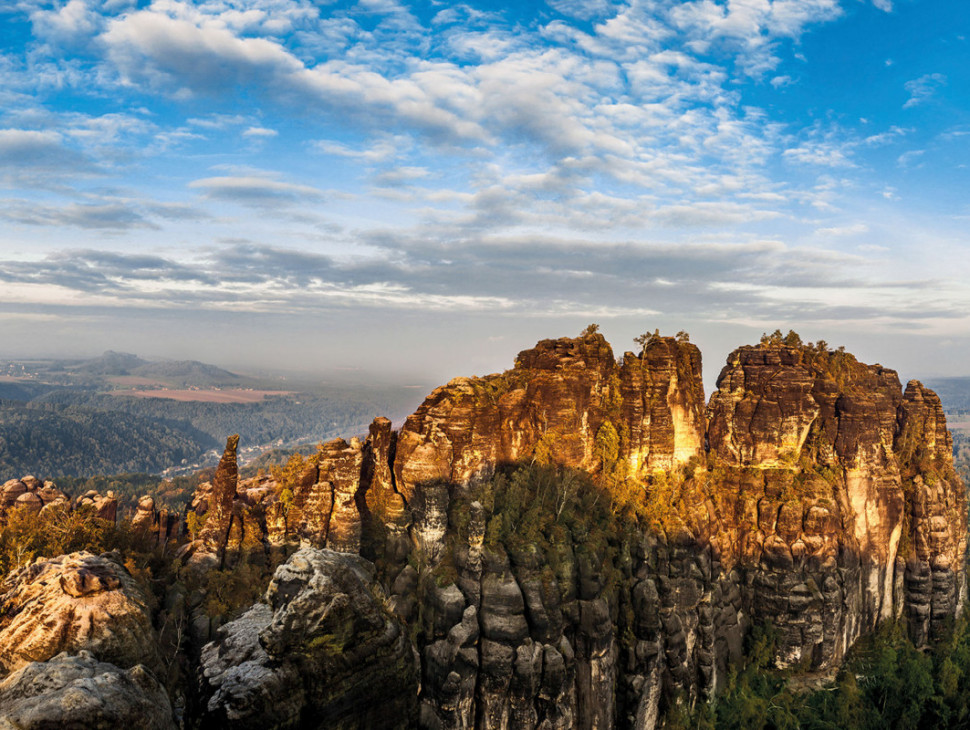
Schrammsteine

Spectacular and bizarre rock formation

The Schrammsteine ​​are a very jagged rock chain east of Bad Schandau.

Climbing facilities lead up to the Schrammstein viewpoint, one of the most impressive vantage points in Saxon Switzerland.

For those who are sure-footed and have a head for heights, we recommend the impressive hike over the Schrammstein mountain range on the ridge path. 

Interesting details:
The Schrammsteine ​​tower over the treetops by up to 125 meters. The Schrammstein view itself is 417 meters high.

Our hiking tip:
Parking spot Ostrau - Direction Schrammsteine (blue Line) - Lattengrund - Schrammtor - Wildschützensteig - Schrammsteinaussicht - Gratweg - Lehne (green Line) - Wildwiese - Ostrau

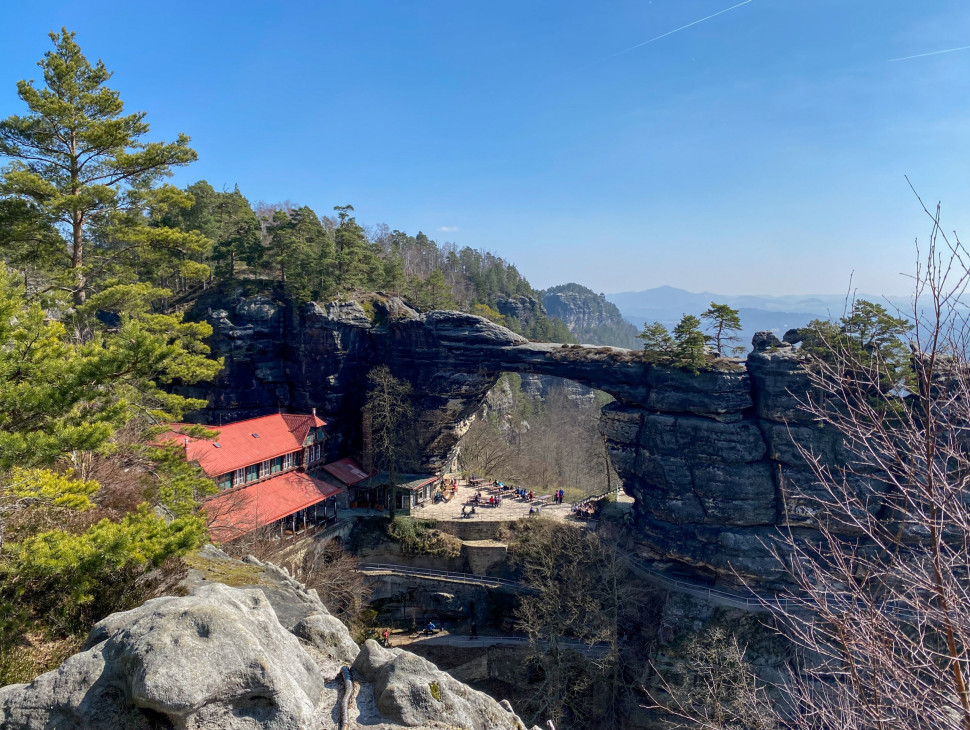
Prebischtor

The Prebischtor in Bohemian Switzerland is the largest natural sandstone rock bridge in Europe.

It has a span of 26.5 meters, is 16 meters high and up to 8 meters wide.

The Prebischtor came about through the weathering of a large niche that had formed in the narrow rock ledge.

The first mention of a Great Gate in this area can be found in a border document from 1410.

Interesting details:
Some of the landscape shots from the film The Chronicles of Narnia were filmed here. However, the actors only appear to be walking on the original rock bridge, because the Prebischtor has not been allowed to be entered since 1982.

Our hinking information:
The Prebischtor is currently NOT accessible via the Gabrielensteig! Access is only possible via Hřensko on the long-distance hiking trail/Malerweg (red line).